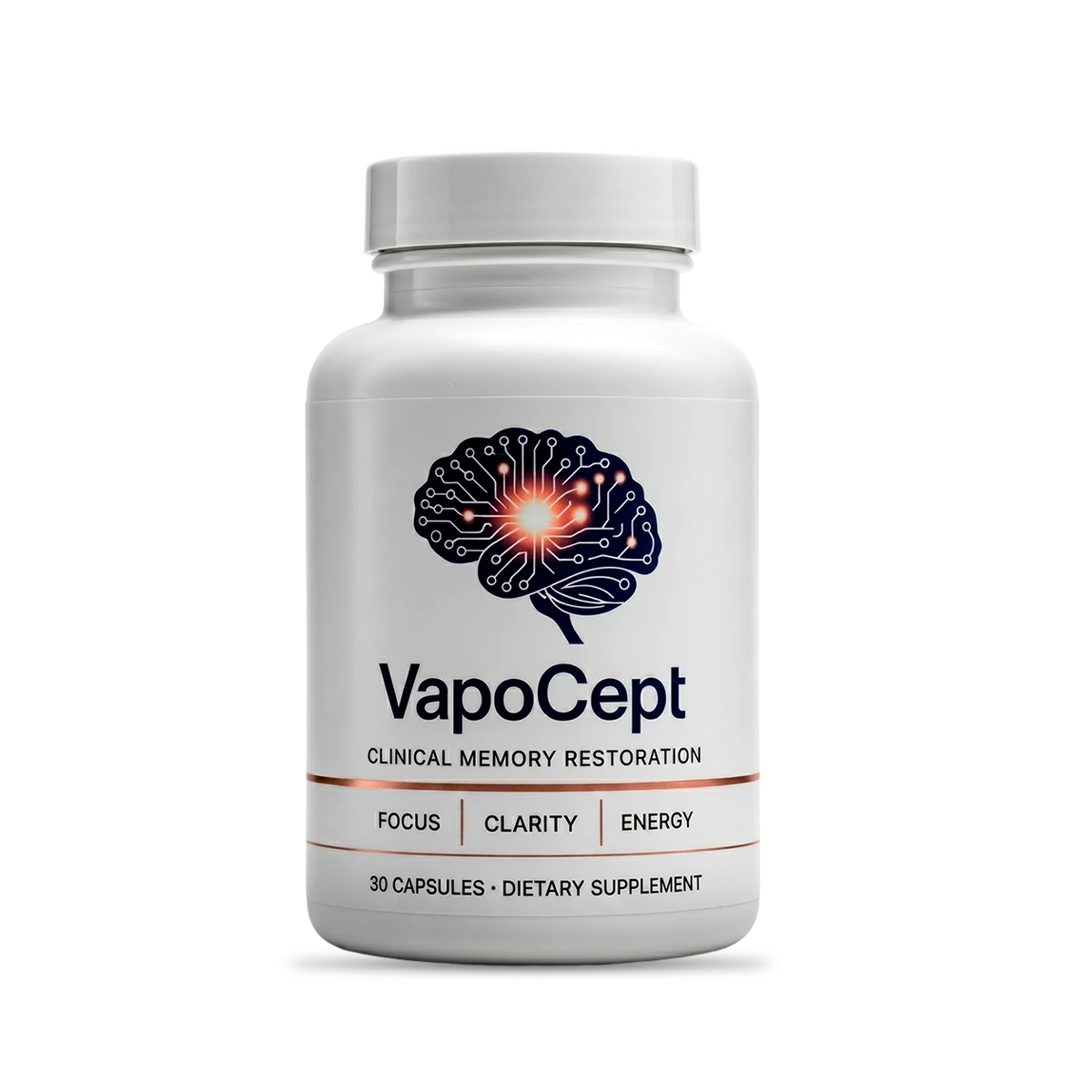
The front of a supplement bottle is advertising. The back is information. This is a walkthrough of what the back should tell you, what it is allowed to hide, and the five checks worth running before any memory supplement goes in the basket — with the VapoCept® panel as the worked example.
Check one: is every active named with a dose?
This single question eliminates a large share of the category. A panel that lists ingredients individually, each with milligrams beside it, lets you look up what the research used and compare. A panel that pools them — "Advanced Memory Complex, 820 mg" — tells you the total weight of a mixture and nothing else.
That practice is legal and extremely common, and it exists for a reason: a blend can be loaded with the cheapest ingredient and finished with a dusting of the expensive one that gets the headline. From the outside the two formulas look identical.
VapoCept® lists all six actives by name on the panel: D-Glucosamine Sulfate Potassium Chloride, Ginkgo Biloba Extract, Turmeric Extract, Marigold Extract, Green Tea Extract and Bamboo Extract. Exact milligram amounts per serving are printed on the physical bottle panel and shown at the official checkout.
Check two: what does "extract" actually mean here?
"Ginkgo Biloba 120 mg" and "Ginkgo Biloba extract standardised to 24% flavone glycosides, 120 mg" are not the same product, and the published trials almost always used the second kind. Standardisation is what makes one batch comparable to another.
The same applies to a ratio like 10:1, meaning ten parts raw plant concentrated to one part extract. A higher ratio is not automatically better — it depends entirely on which compounds survived the process — but its absence tells you the manufacturer either does not know or prefers not to say.
Check three: read the inactive ingredients properly
This is the section most people skip and the one most likely to actually rule a product out for them. It covers the capsule, the fillers and the allergens.
- Capsule material. Gelatin capsules are animal-derived — usually bovine or porcine. VapoCept® uses bovine gelatin, which means it is not vegetarian, not vegan, and not certified halal or kosher. If any of that matters to you, nothing else on the label is relevant.
- Magnesium stearate. A flow agent that stops powder sticking during encapsulation. It appears on an enormous share of supplement labels and is present in small amounts.
- Microcrystalline cellulose. A plant-derived filler that keeps fill weight consistent. Ordinary and disclosed.
- Allergen sources. Glucosamine is sometimes shellfish-derived; with a shellfish allergy, confirm the source with the manufacturer before ordering.
A short, named inactive list is a reasonable signal. A long one full of colourings and sweeteners on a product you swallow once a day is worth a second thought.
Check four: serving size and how many days a bottle lasts
Serving size is the hinge the whole panel turns on. Every number beside an ingredient is per serving, and a serving can be one capsule or four. A bottle of 120 capsules at a four-capsule serving is a thirty-day supply, not a four-month one, and comparing it on price to a one-a-day product is comparing nothing.
VapoCept® is one capsule daily, thirty capsules per bottle — thirty days. That also matters for the routine: a once-daily product attached to breakfast survives, and a four-times-daily schedule usually does not.
Check five: the claims, last
Read these after everything else, because they are the part designed to be read first. Three things to look for:
Structure-function language. "Supports memory" is a permitted structure-function claim and requires the FDA disclaimer alongside it. "Treats memory loss" is a drug claim, is not legal for a supplement, and tells you what sort of company you are dealing with.
Promised timelines. Plant extracts are gradual. Human trials on these ingredients typically run eight to twenty-four weeks before measuring anything. A product promising a difference in days is describing marketing rather than pharmacology.
The guarantee length. This one is quietly informative. If the ingredients need three months to show anything, a fourteen-day return window is not a guarantee, it is a formality. VapoCept® runs sixty days and covers opened bottles.
A note on the word “natural”
Natural ingredients for memory support is a phrase that carries no regulatory meaning and very little practical one. Plant-derived does not mean gentle, inert or well evidenced — ginkgo affects bleeding time, and that is a natural ingredient. A natural memory supplement and a synthesised one should be judged on the same two questions: what is in it, at what dose, and what the human research on that dose actually found.
The same applies to any memory health supplement marketed on botanical origin alone. Treat the origin as a description of the source and nothing more, and then go back to the panel. Nutrients for healthy brain aging are worth looking for by name, not by adjective.
What a good label still cannot tell you
Transparency is not efficacy. A perfectly readable panel can list ingredients with thin evidence behind them, and a clear label on an unimpressive formula is still an unimpressive formula. What a readable label gives you is the ability to check — to look up each ingredient, compare the dose to the trials, and take the panel to your own doctor before you spend anything.
That is the whole argument for reading it. Not that the label proves the product works, but that a label you cannot read makes the question unanswerable.
This guide is educational. Ingredient amounts, manufacturing details and return terms are set by the manufacturer and the official retailer and appear in full at checkout; confirm them there before ordering. Consult your own healthcare provider before starting any supplement.
See the Official Packages